
Systems of incarceration and detention separate families. New Breath Foundation supports grassroots organizations that help keep families together by providing navigation and referral, case management, legal representation, culturally affirming youth leadership and community engagement programs, and support services.
In addition to direct grants, New Breath Foundation provides additional capacity-building resources these organizations need for sustainability—coaching, connections to other funders, training, and community-building convenings.
In the coming weeks, you’ll meet several of our grantee partners—the organizations showing up every day to keep families together. Your support helps them expand their programs and deepen their impact, and we hope their stories inspire you to join us.
We’re committed to this work more than ever.
We’re working to raise $100,000 by December 31st, and every gift brings us closer to that goal.
When you give to Keep Families Together, you directly fund this work.

We Belong Here: Fighting Deportation in the Bhutanese Community
Note: The following is based on an interview with Asian Refugees United and has been lightly edited and reformatted for readers.
Since March 2025, detention and deportation have surged in the Bhutanese community, forcing families apart and changing criminal law and policy. This affects not just those with criminal records, but also criminalizes trans and queer people, and people of certain skin colors.
Mohan Karki’s story illustrates this crisis. A Bhutanese national detained in Ohio for a past trespassing conviction, he’s one of many refugees separated from their families and detained without due process. Some deportees face statelessness and danger. Our last-minute intervention paused his deportation, and while we remain hopeful for his release, the fight continues. The We Belong Here campaign responds to these deportations by building legal support and advocacy for Bhutanese community members.
At Asian Refugees United (ARU), we create belonging for those affected by displacement. Through art, we build creative sanctuary spaces where our community explores cultural roots to recenter and restore our humanity. We ask: what conditions forced families to leave their homelands? War, violence, imperialism. The trauma our communities experienced runs too deep for many to discuss. Economic hardship, substance abuse, and mental health issues expose our communities to violence and the U.S. justice and deportation systems.
Our programs foster preventive, sustainable practices that enable us to survive and thrive. Based on the needs of our community, we’re expanding into advocacy, movement-building, and organizing—connecting art and healing to collective action.
Asian Refugees United is a refugees-led and power-building arts and healing organization with hubs in the San Francisco Bay and Greater Harrisburg, Pennsylvania areas, cultivating and restoring wholeness in communities impacted by displacement by empowering leaders through embodied training programs, collective power-building, ancestral practices, connections to land, and advocacy.

Moloka’i to Waiawa: A Family’s Fight to Stay Connected
Incarceration tears families apart. ‘Ekolu Mea Nui, a We Got Us Fund grantee partner, works to bridge that divide. They help families visit incarcerated loved ones, support Native Hawaiian youth affected by incarceration, and reconnect individuals with their cultural roots for healing. They’ve also championed legislation making family visitation programs more permanent in Hawai’i. As a result, funding is now available for another organization to provide these programs.
Note: The following is based on an interview with ‘Ekolu Mea Nui and has been lightly edited and reformatted for readers.
Vanna is a single mother from Moloka’i whose husband is incarcerated at Waiawa. Despite living on an island with the state’s highest unemployment, expensive housing, and service by only one airline, she does everything possible to attend the prison’s Keiki days.* ‘Ekolu Mea Nui provides financial assistance to her family and ensures everyone feels safe and supported during these visits.
Before her visit, Vanna tried to schedule an additional meeting with her husband for the day before Keiki Day. Prison officials were giving her a hard time since she was already coming the next day. When ‘Ekolu Mea Nui team advocated on her behalf, making both visits possible, Vanna wept with gratitude. Watching their youngest son’s face light up at seeing his father reminded the team why this work matters.
Vanna now wants to bring similar support to other families on Moloka’i who have incarcerated loved ones. She’s returning to school for social work or public health to work in this field and hopes to expand the ʻŌpiʻo Waiwai program.** ‘Ekolu Mea Nui is now exploring how to bring her onto their team to help develop curriculum.
‘Ekolu Mea Nui seeks to transform Hawai’i’s justice system through Native Hawaiian cultural practices and values. Their overarching goal is to innovate alternatives to incarceration, restore the human spirit, build resilient ʻohana, and change laws and policies. They are committed to building a strong organization to realize this vision for their people, for a better Hawai’i.
_______
*Keiki days are events where ‘Ekolu Mea Nui helps incarcerated individuals reconnect with their families and culture. Volunteers provide food, and it’s the only time they eat Hawaiian food while in prison. “Keiki” refers to “child” or “children” in Hawaiian. Note: Waiawa Correctional Facility is located on O’ahu, a different island from *Moloka’i.
** “ʻŌpiʻo” means “youth,” and “waiwai” means “wealth” or “abundance” in Hawaiian.
Fighting to Keep Families Whole: KhAAG’s Frontline Deportation Defense
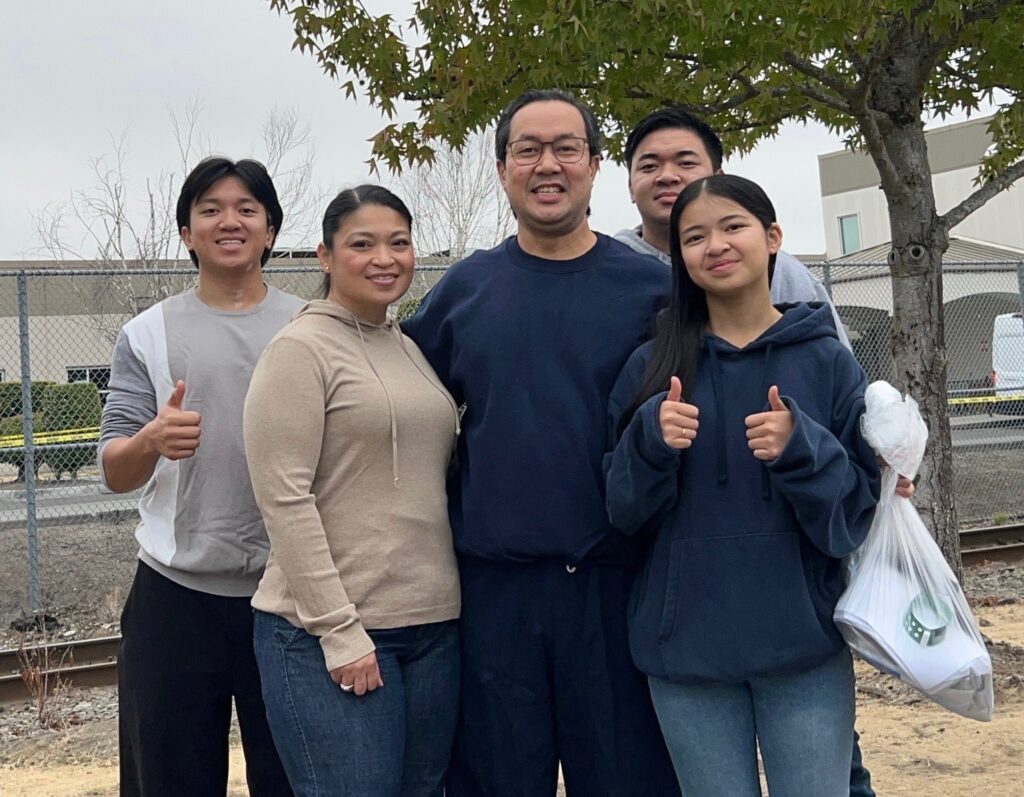
Note: The following is based on an interview with KhAAG and has been lightly edited and reformatted for readers.
As deportations surge and increasingly dangerous situations emerge, including third-country deportations, KhAAG has positioned itself at the forefront of this fight. We work directly with families, provide critical media training, and reach out to communities beyond Southeast Asia who are also facing the threat of third-country deportations. Our work extends far beyond individual campaigns and cases. It impacts entire communities regionally, nationally, and now internationally.
One of our team members, Bong Many, was incarcerated over 30 years ago and has been instrumental in connecting with those who’ve served time and now face deportation. When people learn that Many shares their experience, it changes everything; they’re not just talking to an advocate—they’re talking to someone who truly understands.
Keeping Families Together
When a Vietnamese national was re-detained at an ICE check-in, Bong Many worked through the night to launch his case. With other organizations overwhelmed, we contacted the Seattle Clemency Project (SCP) for legal support. SCP successfully filed a habeas corpus petition, and he won his release, had his conviction vacated, and regained his green card. The heartfelt letter from him and his family reminded our team why we answer emails in the middle of the night. Cases like these make the work worthwhile.
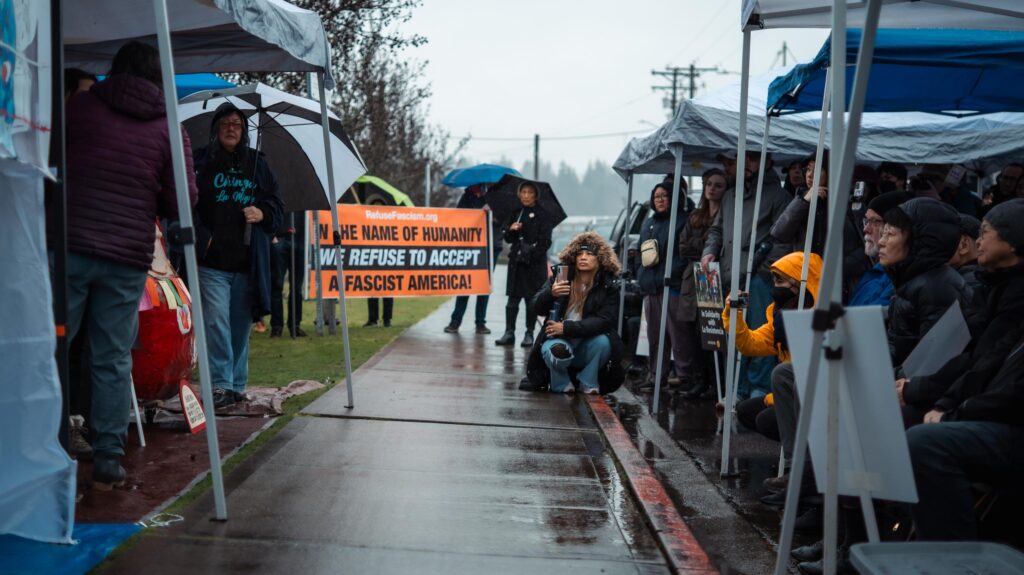
The Work Continues
We continue to push for expedited gubernatorial pardons and new legislation while sharing our expertise with other organizations to help them achieve similar goals. We also mobilize our networks quickly, leveraging the collective experience, knowledge, and leadership of those directly impacted.
The proof is in the results: families reunited after loved ones were pulled off deportation flights at the 11th hour, and we’ve helped them secure permanent residency and citizenship.
Recently, and specifically this year, we have expanded significantly, thanks in no small part to New Breath Foundation’s We Got Us Fund grant. With NBF’s support, we’ve been able to participate at a much greater level and expand our support to include individuals in Laos and Vietnam, meeting the surging demand. While we can’t fulfill every need, these examples illustrate some of the pathways we’ve been able to forge.
The Khmer Anti-deportation and Advocacy Group (KhAAG) is dedicated to advancing the rights and welfare of all refugee and immigrant communities by offering support, assistance, and guidance in navigating the immigration system in the United States.